A practical 2026 playbook to scale crypto app installs and funded users with Google App Campaigns: policy-safe setup, event mapping, creative systems, bidding, and profitability controls.
Why Crypto Apps Need a Different UAC Strategy in 2026
Most App Campaign playbooks were built for gaming, e-commerce, or utility apps. Crypto is different. The journey from install to revenue is longer, has more friction, and depends on trust-heavy actions like KYC, deposit, and first trade. That means if you optimize only for installs, you will buy a lot of low-intent users and burn budget fast.
In 2026, winning crypto app growth teams treat Google App Campaigns as a full-funnel acquisition system, not an install channel. They align policy compliance, event architecture, onboarding UX, and bidding strategy before scaling spend. This is the playbook that works.
Step 1: Confirm Compliance and Market Eligibility First
Before budget, creatives, or bidding, validate policy. Crypto advertisers often fail because they treat compliance as a formality. On Google, policy determines delivery quality and scalability. If you launch with unclear legal positioning, missing disclosures, or unsupported market claims, campaign performance will be unstable from day one.
Create a compliance preflight checklist:
- Country-level eligibility for your specific crypto product category
- Landing page and app store messaging consistency
- Risk disclosures and legal terms visibility
- Brand/entity verification and account-level policy readiness
- No misleading earnings language in creatives
Keep a simple rule: if legal or policy risk is ambiguous, do not scale that market until clarified.
Want this implemented for your funnel?
Get a free 90-day growth plan with tracking, channel priorities, and next-week actions.
Step 2: Define the Right Conversion Goal
Install volume is not a growth KPI for crypto apps. You need a staged conversion model that reflects business value. For most apps, the real sequence is:
- Install
- Registration
- KYC start
- KYC approved
- First deposit
- First trade
- 7-day retained trader
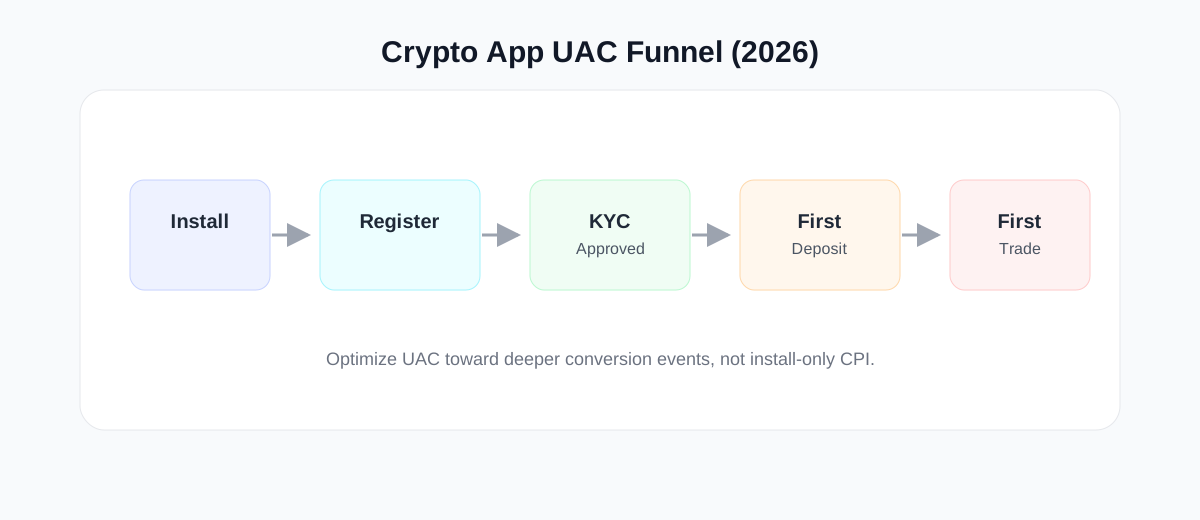
Use deep-event optimization and treat install as an entry event, not the final goal.
Your UAC optimization goal should evolve along this path. Early on, optimize for the deepest event that still has enough weekly volume. Later, move toward value-based optimization where event values reflect expected LTV or net margin contribution.
Step 3: Build a Clean Event Architecture (App + Analytics + Ads)
UAC performance is only as good as your event quality. In crypto, event noise is common because app analytics, MMP data, and backend events are not aligned. Fix this first:
- Use consistent event names across Firebase/MMP/backend systems
- Deduplicate key events (especially KYC and deposit events)
- Pass event timestamps and currency/value with strict formatting
- Validate event firing by platform (Android/iOS) and app version
- Audit weekly for drops, spikes, and delayed postbacks
Do not send vanity events to Google as primary conversions. Focus on actions tied to real revenue probability.
Step 4: Segment Campaigns by Growth Stage and Geo
One global UAC campaign for all markets usually underperforms. Crypto behavior, regulation, and CPI vary massively by region. A better structure:
- Tier 1 markets: high compliance clarity, higher intent, usually higher CPI
- Tier 2 growth markets: scalable volume, wider creative and payout variance
- Test markets: limited budget, strict guardrails, fast decision windows
Run separate campaign groups for onboarding objectives too, for example registration-focused vs funded-user-focused. This separation protects signal quality and makes budget reallocation easier.
Step 5: Creative System for Crypto UAC (Not One-Off Ads)
In 2026, creative velocity is a direct performance lever. UAC needs a feed of fresh text, image, and video assets. Crypto teams that win build creative as a weekly system.
Use three creative angles at all times:
- Trust angle: security, custody standards, reliability, transparency
- Utility angle: fast execution, simple UX, low friction onboarding
- Outcome angle: smarter portfolio workflows, market access, pro features
Keep compliance-safe copy. Avoid guaranteed profit language. Replace hype with clear product value and proof-driven positioning.
Step 6: Match Creative Promise to Onboarding Reality
One of the biggest hidden leaks in crypto UAC is promise mismatch. Ads bring users with one expectation, but onboarding shows another flow. This destroys downstream conversion rates and teaches Google the wrong audience signals.
Fix this with message mapping:
- Each top-performing asset cluster should map to a specific onboarding path
- First 2 screens should reinforce the ad promise
- KYC explanation should be concise, transparent, and trust-forward
- Deposit CTA should appear at the right intent moment, not too early
UAC optimization and onboarding CRO are one system. Treat them as separate and you pay for it twice.
Step 7: Bidding Strategy Progression (Install to Value)
Most teams switch bidding models too quickly. Use a staged progression:
- Phase A: Install or registration learning phase with strict quality filters
- Phase B: tCPA on KYC approved or first deposit when data stabilizes
- Phase C: value-based bidding (tROAS) when event values are reliable
When moving phases, change one major variable at a time: goal, budget, or geo scope. Avoid full resets unless absolutely necessary.
Step 8: Budget Rules That Protect Profitability
Crypto acquisition can scale quickly in spend but slowly in quality if controls are weak. Use explicit guardrails:
- Set max acceptable CAC by market and event depth
- Increase budget incrementally after stable 7-day and 14-day trends
- Pause markets with high fraud signals or weak funded-user rate
- Use margin-adjusted targets, not just top-line conversion count
Budget decisions should reflect post-install value, not dashboard vanity metrics.
Step 9: Fraud and Low-Quality Traffic Controls
Crypto verticals attract opportunistic and incentive-driven traffic. If you do not filter quality, optimization drifts toward cheap but low-value installs.
Quality defense checklist:
- Flag suspicious install-to-registration timing patterns
- Monitor abnormal geo/device concentration spikes
- Track KYC fail reasons and duplicate account attempts
- Use backend quality scores to segment conversion imports
- Exclude known bad cohorts quickly from optimization loops
Quality filtering is not optional in crypto paid acquisition. It is core infrastructure.
Step 10: Use First-Party Revenue Signals for Smarter Optimization
As privacy changes continue, first-party data is the long-term advantage. Export and model post-install value signals that matter:
- Time to first deposit
- Deposit amount bands
- First 7-day trading frequency
- Retention and repeat trade patterns
Then feed stable, policy-compliant conversion signals back into your campaign optimization framework. Teams that close this loop outperform install-only advertisers by a wide margin.
Measurement Framework: What to Track Weekly
Track a compact but complete performance set every week:
- CPI and install volume by geo
- Registration rate from install
- KYC completion rate
- First deposit rate
- Cost per funded user
- 7-day and 30-day payer retention
- Payback period estimate by campaign group
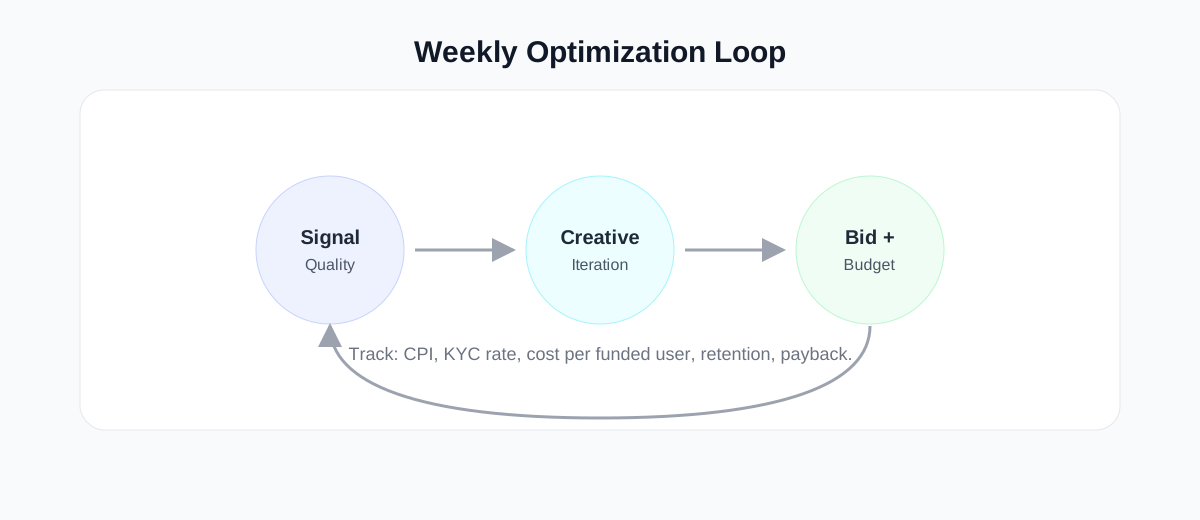
Run this loop weekly: improve signal quality, refresh creatives, then tune bids and budgets.
Do not manage UAC from one metric. Crypto profitability depends on the full conversion path.
Recommended Account Cadence for Crypto UAC Teams
A predictable operating rhythm improves results more than random optimizations:
- Daily: spend pacing, delivery anomalies, policy warnings
- Twice weekly: creative performance readout and asset refresh queue
- Weekly: funnel conversion diagnostics by geo and cohort quality review
- Biweekly: bidding target adjustments and budget reallocation
- Monthly: strategic review with product and compliance teams
Consistency beats intensity in app growth operations.
Common Mistakes That Kill Crypto UAC Performance
- Optimizing only for install CPI with no downstream quality target
- Using one campaign for all markets and all objectives
- Feeding noisy or duplicate conversion events
- Overpromising in creatives and underdelivering in onboarding
- Switching bidding strategy every few days
- Ignoring retention and only counting first actions
If any of these are happening, fix them before increasing budget.
90-Day Execution Plan (Practical Roadmap)
Days 1-14: compliance check, event QA, baseline campaign structure, first creative set.
Days 15-30: stabilize conversion tracking, launch geo segmentation, start creative iteration loops.
Days 31-60: shift to deeper conversion optimization in qualified markets, cut low-quality sources aggressively.
Days 61-90: test value-based bidding where data supports it, scale budgets with profitability guardrails, align product onboarding improvements with ad signals.
This roadmap keeps growth disciplined while still moving fast.
Final Thoughts
Google UAC for crypto apps in 2026 is not about finding a single hack. It is about system design: policy-safe positioning, high-integrity conversion data, strong creative testing, and bidding tied to real value. Teams that operationalize these pieces can scale efficiently while protecting unit economics.
If your campaigns are producing installs but not funded users, the answer is usually not “increase budget.” The answer is to upgrade signal quality, tighten onboarding alignment, and optimize to business outcomes.
Do that consistently, and UAC becomes a predictable growth engine for your crypto app.
Get weekly growth ideas in your inbox
Practical SEO, PPC, analytics, and CRO notes with zero spam.
Frequently Asked Questions
Can crypto apps run Google App Campaigns in 2026?▾
What should be the primary optimization goal for UAC in crypto?▾
How much data is needed before switching to value-based bidding?▾
Why are my crypto app installs high but funded users low?▾

Digital marketing consultant — SEO, PPC, analytics & CRO.