Viewable Impressions
The count of ad impressions that actually appeared on screen long enough to be seen — the MRC standard is 50% of pixels in view for at least one second for display, or two seconds for video. Viewability is a cleaner denominator than raw impressions because it strips out ads served below the fold or never scrolled into view. Viewable CPM (vCPM) and viewability rate are the key levers for programmatic brand campaigns.
How Viewable Impressions works in practice
Viewable impressions are the foundation of any serious brand-measurement programme because raw impression counts include a large volume of ads that were never actually seen — below-the-fold placements, fast-scrolled feeds, auto-playing video in muted background tabs. The MRC viewability standard is 50% of pixels in view for at least one second for display and two seconds for video, and most DSPs now let buyers optimise directly against viewable CPM (vCPM) rather than raw CPM. Viewability rates vary widely by format and platform — native placements often exceed 70%, while low-quality display networks can sit below 40% — so comparing cost per viewable impression, not cost per impression, is what separates meaningful brand buys from filler. Third-party verification (IAS, DoubleVerify, Moat) is standard on any spend meaningful enough to care about the difference.

Your digital consultant
Hi, I'm Wameq.
If your ad spend is climbing but returns are not, let's find where the money is leaking.
Let's talk →This term sits in the Paid Media category, which means it is most useful when evaluating paid campaigns, auction dynamics, targeting control, and media efficiency. The goal is not to memorize the label. The goal is to know when it should change a decision, a page, a campaign, or a measurement setup.
Related terms
The cost per one thousand ad impressions. Common in display and social advertising where brand awareness is the goal. CPM = (Total Spend ÷ Total Impressions) × 1,000.
Automated buying and selling of digital advertising inventory through real-time bidding platforms. Programmatic enables precise audience-level targeting across thousands of publisher sites simultaneously, replacing manual direct insertion orders. Demand-Side Platforms (DSPs) such as DV360, The Trade Desk, and Amazon DSP are the primary execution tools.
Brand safety refers to controlling where ads appear so a brand is not shown next to harmful, misleading, or unsuitable content. It is a core consideration in display, video, and programmatic advertising where inventory quality can vary significantly.
The percentage of eligible impressions your ads received out of the total available. Lost IS (budget) and Lost IS (rank) break down the two primary reasons for missed impressions and guide budget or bid decisions.
Put Viewable Impressions to work
Understanding Viewable Impressions is one thing — operationalising it across tracking, acquisition, and conversion is another. Explore the full range of digital marketing services, including SEO & content consulting, paid media management, and analytics & CRO. Or work directly with a digital marketing consultant in Dubai on building growth systems that actually compound.
Learn more: related articles
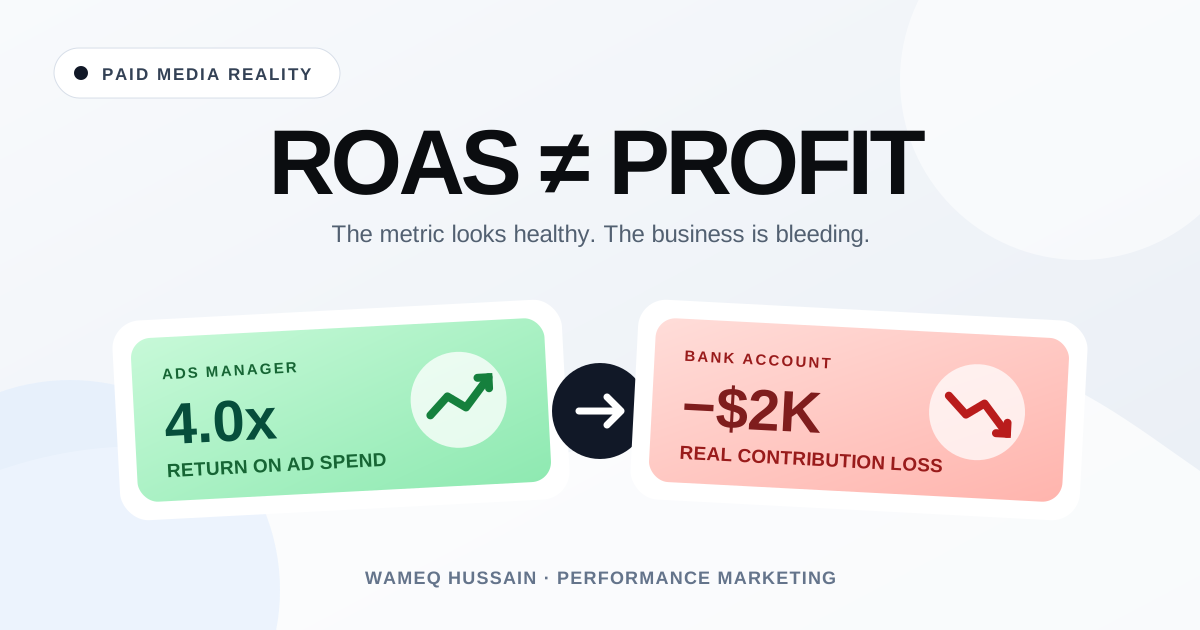
Why Your Ads Look Profitable but Your Business Is Still Losing Money
Your ads report healthy ROAS while margin keeps shrinking. See where the numbers split—and how to measure whether paid media actually makes money.
Crypto Advertising Compliance in 2026: Licences, Certifications and Ad Platform Rules by Region
Crypto is now the most heavily gated advertising category on the internet, and the gate has two locks: the licence your financial regulator issues, and the certification each ad platform grants on proof of it — country by country. This is the full 2026 reference: every region Google will certify and the exact licence it demands, what stays banned regardless of licence, the marketing rules VARA, MiCA, the FCA and MAS impose on your creative, and what to do in the markets where paid media is simply closed.
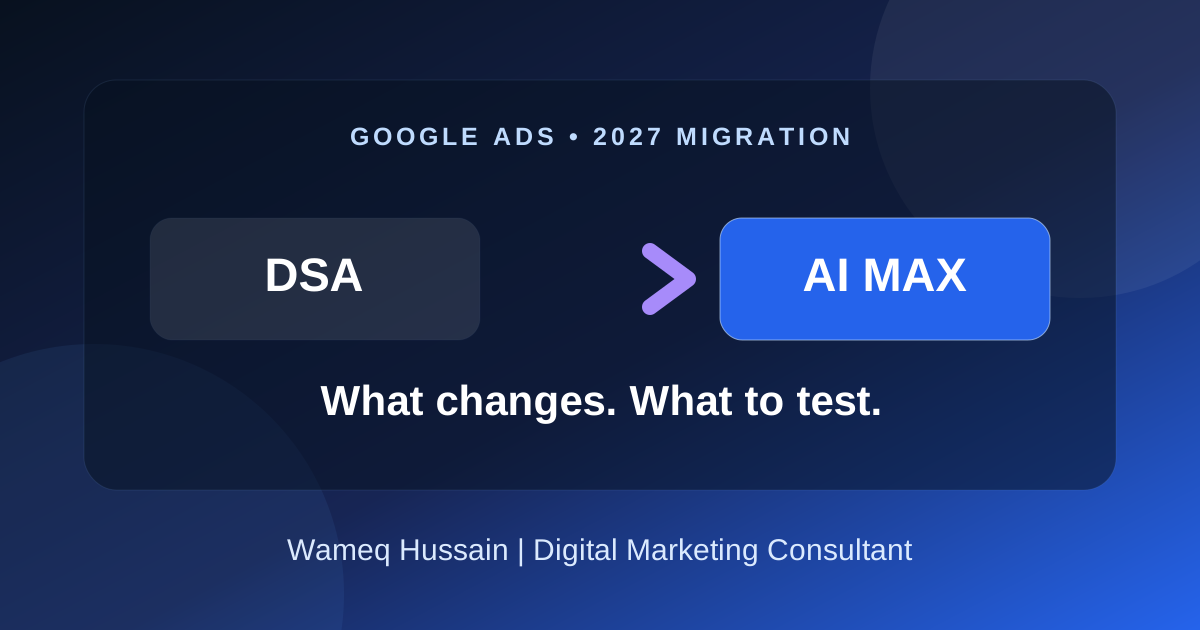
Google Dynamic Search Ads Are Going Away: How to Prepare for AI Max
Google is moving Dynamic Search Ads into AI Max from February 2027. Here is what changes and how to test the migration without giving up control.