Share of Voice
SOV (Share of Voice)
The percentage of total available impressions in a market captured by a specific brand across paid search, organic search, or all digital channels. In Google Ads, Search Impression Share is the paid equivalent. Tracking organic Share of Voice via rank tracking tools (percentage of target queries a domain appears in) is a leading indicator of brand awareness growth.
How Share of Voice works in practice
Share of voice in paid search is directly calculable from Google Ads Search Impression Share data — (your impressions ÷ total eligible impressions) × 100. Organic share of voice requires a rank tracking tool that measures what percentage of tracked target queries your domain appears for in the top 10 results. Research by the IPA and Les Binet consistently links share of voice to share of market — brands with SOV above their market share tend to grow, while those below tend to decline. For small specialists competing against large platforms, dominating share of voice in a tightly defined niche segment (e.g., "performance marketing for fintech" rather than "performance marketing") is a realistic and defensible strategy.

Your digital consultant
Hi, I'm Wameq.
If your ad spend is climbing but returns are not, let's find where the money is leaking.
Let's talk →This term sits in the Paid Media category, which means it is most useful when evaluating paid campaigns, auction dynamics, targeting control, and media efficiency. The goal is not to memorize the label. The goal is to know when it should change a decision, a page, a campaign, or a measurement setup.
Related terms
The percentage of eligible impressions your ads received out of the total available. Lost IS (budget) and Lost IS (rank) break down the two primary reasons for missed impressions and guide budget or bid decisions.
Unpaid traffic from search engine results pages driven by SEO. Organic search traffic is high-intent and compounds over time, making it one of the most cost-efficient acquisition channels at scale compared to paid media.
The page displayed by a search engine in response to a query. SERP features include organic results, paid ads, featured snippets, People Also Ask boxes, image packs, and local packs — each requiring different optimisation tactics.
Serving ads to users who have previously visited your website or interacted with your brand. Remarketing audiences typically convert at a higher rate and lower CPA than cold audiences, making it a high-ROAS channel.
Put Share of Voice to work
Understanding Share of Voice is one thing — operationalising it across tracking, acquisition, and conversion is another. Explore the full range of digital marketing services, including SEO & content consulting, paid media management, and analytics & CRO. Or work directly with a digital marketing consultant in Dubai on building growth systems that actually compound.
Learn more: related articles
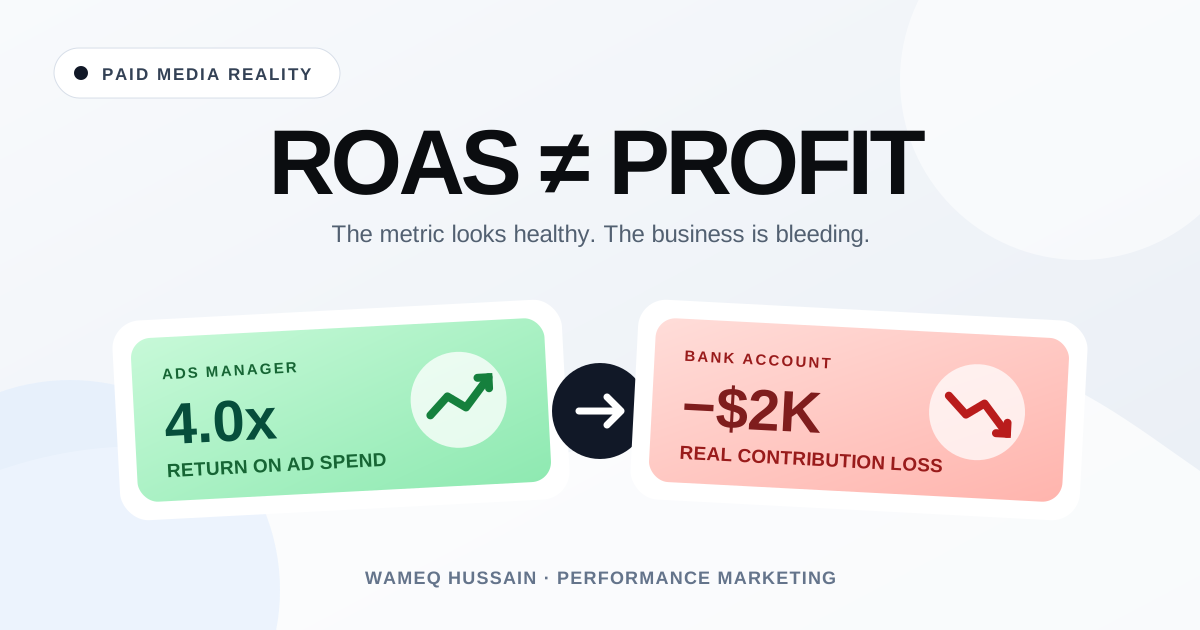
Why Your Ads Look Profitable but Your Business Is Still Losing Money
Your ads report healthy ROAS while margin keeps shrinking. See where the numbers split—and how to measure whether paid media actually makes money.
Crypto Advertising Compliance in 2026: Licences, Certifications and Ad Platform Rules by Region
Crypto is now the most heavily gated advertising category on the internet, and the gate has two locks: the licence your financial regulator issues, and the certification each ad platform grants on proof of it — country by country. This is the full 2026 reference: every region Google will certify and the exact licence it demands, what stays banned regardless of licence, the marketing rules VARA, MiCA, the FCA and MAS impose on your creative, and what to do in the markets where paid media is simply closed.
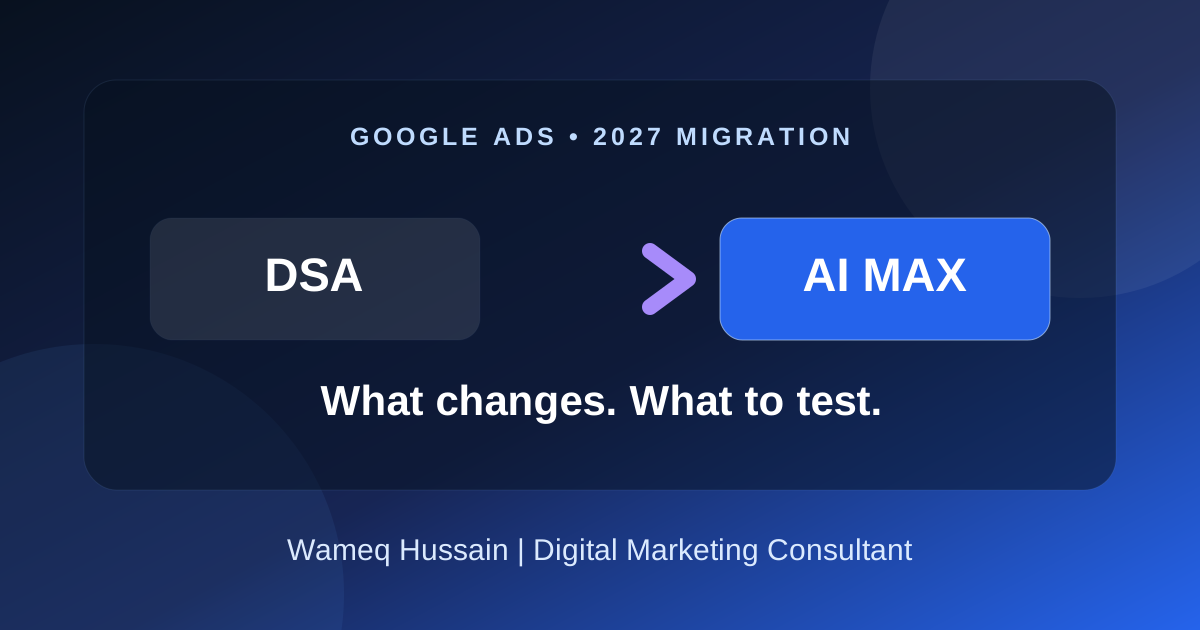
Google Dynamic Search Ads Are Going Away: How to Prepare for AI Max
Google is moving Dynamic Search Ads into AI Max from February 2027. Here is what changes and how to test the migration without giving up control.