
ROAS
Return on Ad Spend
The revenue generated for every dollar spent on advertising. Calculated as (Revenue ÷ Ad Spend) × 100. A ROAS of 400% means $4 earned for every $1 spent — a key metric for evaluating paid channel profitability.
How ROAS works in practice
ROAS is a campaign-level efficiency metric; CAC and LTV are the business-level metrics that determine whether a given ROAS is actually profitable. A campaign showing 800% ROAS may still lose money if gross margin is 20% and fulfilment costs are high — always triangulate ROAS with margin and payback period before scaling spend. Target ROAS bidding in Google Ads instructs the algorithm to set bids to achieve a specific revenue-to-spend ratio, but requires accurate revenue conversion tracking to function correctly. For subscription businesses, ROAS should be calculated on predicted LTV rather than first-order revenue to avoid undervaluing high-retention customer cohorts.

Your digital consultant
Hi, I'm Wameq.
If your ad spend is climbing but returns are not, let's find where the money is leaking.
Let's talk →This term sits in the Paid Media category, which means it is most useful when evaluating paid campaigns, auction dynamics, targeting control, and media efficiency. The goal is not to memorize the label. The goal is to know when it should change a decision, a page, a campaign, or a measurement setup.
Related terms
The total cost to acquire one new paying customer, including ad spend, salaries, and tools divided by the number of new customers in a period. Lowering CAC while maintaining quality is a core lever of profitable growth.
The cost to achieve a specific conversion action such as a purchase, lead, or sign-up. CPA = Total Spend ÷ Conversions. It differs from CAC in that it tracks any conversion event, not only net-new customer acquisition.
Google Ads' automated bid strategies that use machine learning to optimise for conversions or conversion value at auction time. Strategies include Target CPA, Target ROAS, Maximise Conversions, and Maximise Conversion Value.
A results-driven form of digital advertising where advertisers only pay when a specific action occurs — click, lead, or purchase. It emphasises measurability, optimisation, and ROI over vanity metrics.
Put ROAS to work
Understanding ROAS is one thing — operationalising it across tracking, acquisition, and conversion is another. Explore the full range of digital marketing services, including SEO & content consulting, paid media management, and analytics & CRO. Or work directly with a digital marketing consultant in Dubai on building growth systems that actually compound.
Learn more: related articles
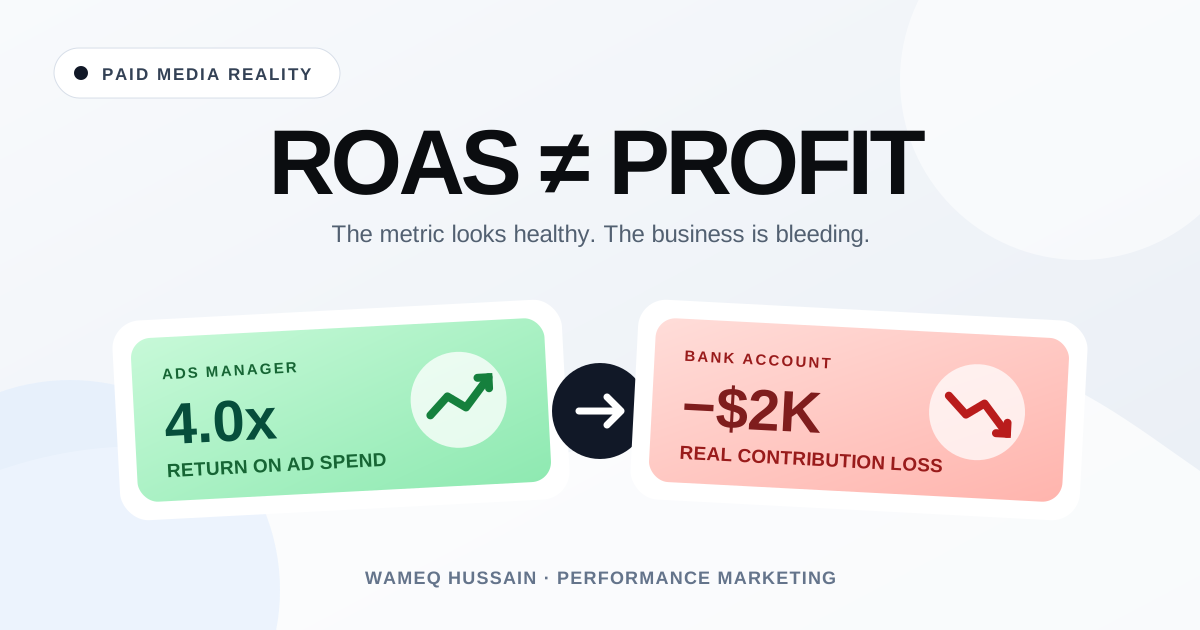
Why Your Ads Look Profitable but Your Business Is Still Losing Money
Your ads report healthy ROAS while margin keeps shrinking. See where the numbers split—and how to measure whether paid media actually makes money.

Crypto Advertising Compliance in 2026: Licences, Certifications and Ad Platform Rules by Region
Crypto is now the most heavily gated advertising category on the internet, and the gate has two locks: the licence your financial regulator issues, and the certification each ad platform grants on proof of it — country by country. This is the full 2026 reference: every region Google will certify and the exact licence it demands, what stays banned regardless of licence, the marketing rules VARA, MiCA, the FCA and MAS impose on your creative, and what to do in the markets where paid media is simply closed.
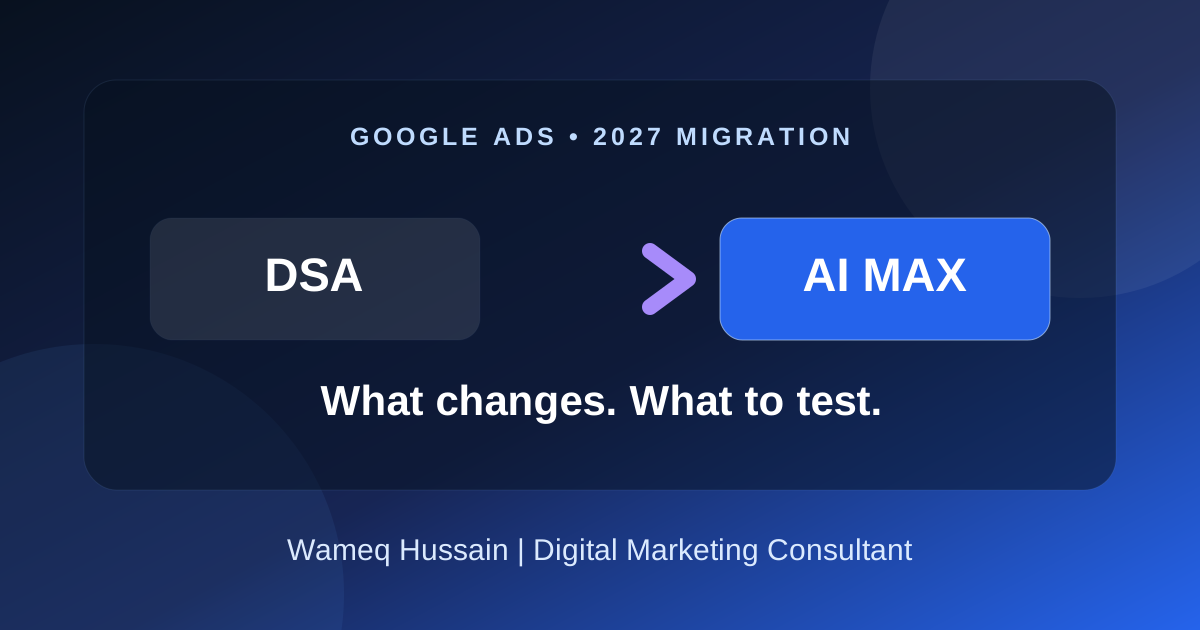
Google Dynamic Search Ads Are Going Away: How to Prepare for AI Max
Google is moving Dynamic Search Ads into AI Max from February 2027. Here is what changes and how to test the migration without giving up control.