
Geo-Experiment
A measurement method where ads are increased, reduced, or paused in selected geographic markets while similar markets are held constant as controls. Comparing performance between test and control regions helps estimate true lift without relying entirely on attribution software. Geo-experiments are especially useful for brand campaigns, YouTube, and upper-funnel channels where click-based attribution undercounts impact.
How Geo-Experiment works in practice
Geo-Experiment matters most when teams are trying to make better decisions around paid campaigns, auction dynamics, targeting control, and media efficiency. The short definition gives the surface meaning, but the practical value comes from knowing when this concept should actually influence strategy and when it should not.
In real-world work, Geo-Experiment is rarely important on its own. It usually becomes useful when paired with cleaner measurement, stronger page or funnel structure, and a clear understanding of what business outcome needs to improve. It is closely connected to Incrementality Testing, ROAS, Attribution Model because those concepts usually shape how Geo-Experiment is measured or applied in practice.
A good way to use Geo-Experiment is to treat it as a decision aid rather than a vanity number. If it helps explain why performance is improving, stalling, or getting more expensive, it is useful. If it is being tracked without any operational consequence, it is probably being overvalued.

Your digital consultant
Hi, I'm Wameq.
If your ad spend is climbing but returns are not, let's find where the money is leaking.
Let's talk →This term sits in the Paid Media category, which means it is most useful when evaluating paid campaigns, auction dynamics, targeting control, and media efficiency. The goal is not to memorize the label. The goal is to know when it should change a decision, a page, a campaign, or a measurement setup.
Related terms
A controlled experiment measuring the true causal impact of a marketing channel by comparing a test group exposed to the campaign against a holdout group that is not. Incrementality testing answers "how much revenue would we have generated without this channel?" — a question attribution models estimate but cannot definitively answer. Holdout tests are offered natively by Meta (Conversion Lift) and Google (Geo Experiments).
The revenue generated for every dollar spent on advertising. Calculated as (Revenue ÷ Ad Spend) × 100. A ROAS of 400% means $4 earned for every $1 spent — a key metric for evaluating paid channel profitability.
The rule that determines how credit for a conversion is assigned to different marketing touchpoints in the user journey. Choosing the right model affects how you allocate budget across channels and evaluate channel ROI.
Put Geo-Experiment to work
Understanding Geo-Experiment is one thing — operationalising it across tracking, acquisition, and conversion is another. Explore the full range of digital marketing services, including SEO & content consulting, paid media management, and analytics & CRO. Or work directly with a digital marketing consultant in Dubai on building growth systems that actually compound.
Learn more: related articles
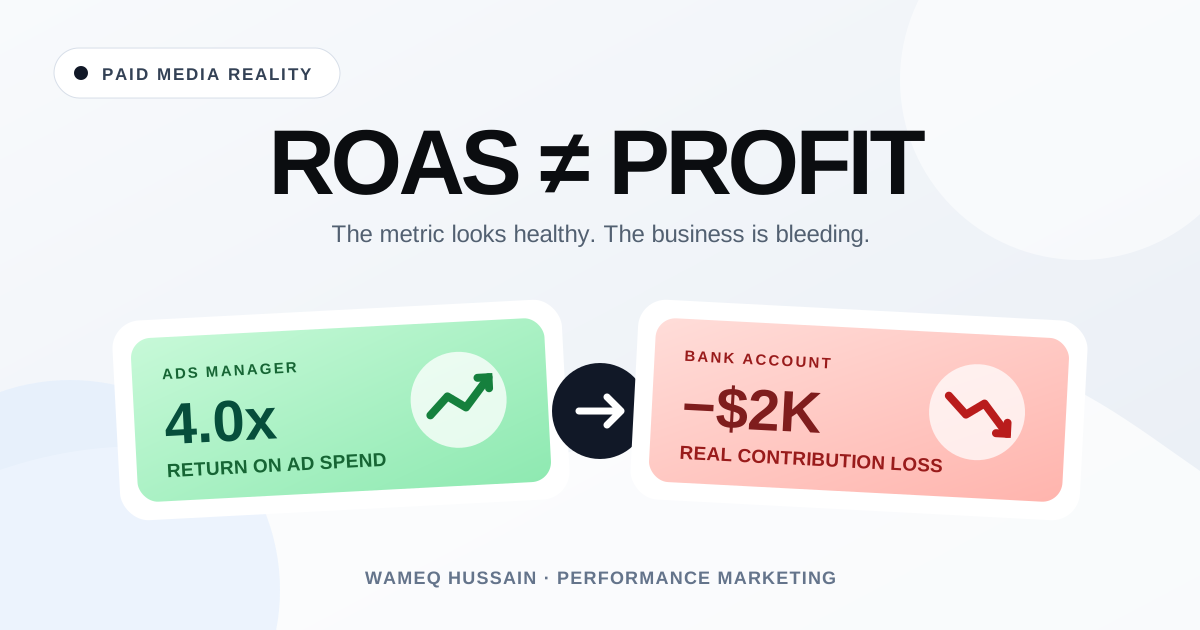
Why Your Ads Look Profitable but Your Business Is Still Losing Money
Your ads report healthy ROAS while margin keeps shrinking. See where the numbers split—and how to measure whether paid media actually makes money.

Crypto Advertising Compliance in 2026: Licences, Certifications and Ad Platform Rules by Region
Crypto is now the most heavily gated advertising category on the internet, and the gate has two locks: the licence your financial regulator issues, and the certification each ad platform grants on proof of it — country by country. This is the full 2026 reference: every region Google will certify and the exact licence it demands, what stays banned regardless of licence, the marketing rules VARA, MiCA, the FCA and MAS impose on your creative, and what to do in the markets where paid media is simply closed.
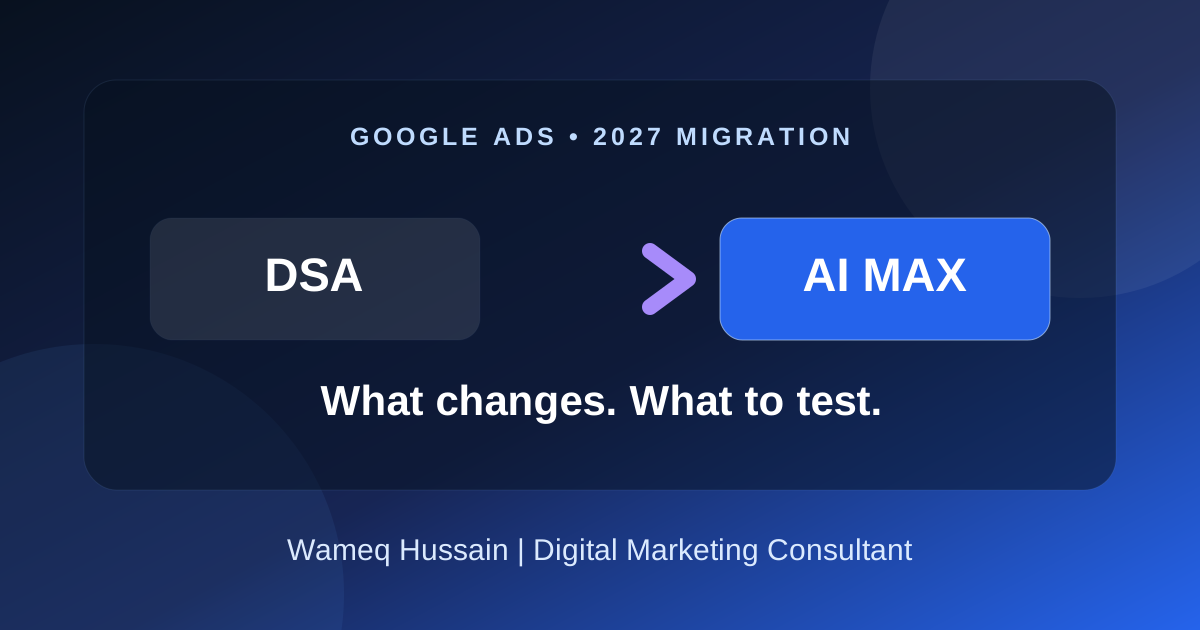
Google Dynamic Search Ads Are Going Away: How to Prepare for AI Max
Google is moving Dynamic Search Ads into AI Max from February 2027. Here is what changes and how to test the migration without giving up control.