A step-by-step framework for turning crypto traffic into verified, funded users, with clear guidance on positioning, channel strategy, onboarding, retention, and performance tracking.
Most crypto funnels don't fail at ads. They fail at the handoff.
Teams usually start with channels: "Should we run Meta or Google first?" The better question is: what happens after the click? If a user lands on a generic page, doesn't understand why your product is safer or better, and gets dropped into a confusing onboarding flow, no media strategy can rescue that leak.
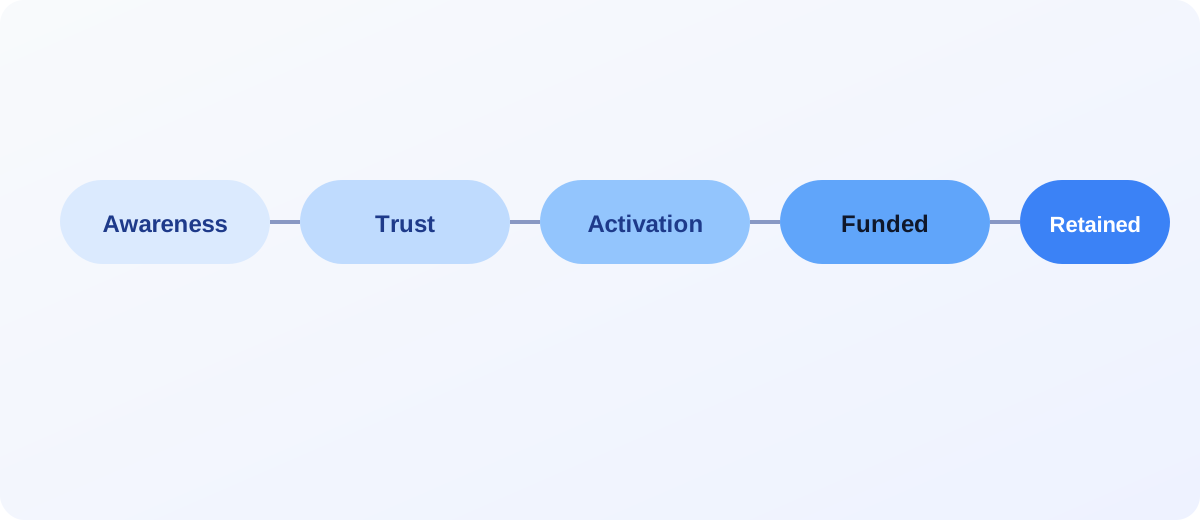
A high-converting crypto funnel is not one campaign. It is a system: traffic -> trust -> activation -> first value -> retention. The conversion event you optimize for determines the quality of users you end up with.
Step 1: Define one primary conversion goal that reflects business value
If you optimize for installs, you will get installs. If you optimize for qualified, funded users, your funnel behavior changes. For exchanges and trading apps, a practical primary metric is:
- Funded-user CPA (KYC approved + first deposit) for acquisition efficiency
- D7 or D30 retention for quality validation
- Early LTV proxy (first trade, second session, watchlist setup, recurring buy setup)
Align your campaign goals, landing page CTAs, and onboarding milestones to this metric. Otherwise each team optimizes for a different outcome and performance looks better in dashboards than in revenue.
Want this implemented for your funnel?
Get a free 90-day growth plan with tracking, channel priorities, and next-week actions.
Step 2: Build your funnel entry points by intent, not by channel
A common mistake is pushing all traffic to one page with one message. Crypto buyers are not one audience. New entrants, active traders, and passive investors need different angles and proof.
Use at least three intent-specific entry points:
- Beginner intent: safety, regulation, easy onboarding, simple buy flow
- Active trader intent: spreads, liquidity, execution speed, advanced tools
- Portfolio intent: recurring buys, alerts, and long-term portfolio control
Each intent segment should have matching ad creative, landing copy, and social proof. This is also where your Apple Search Ads structure and Google UAC strategy should align with product messaging.
Step 3: Design landing pages for trust first, conversion second
Crypto is a trust-sensitive category. Before a user evaluates features, they evaluate risk. Your landing page should answer three questions fast: Is this legit? Is this for my use case? What happens next?
Minimum trust block above the fold:
- Regulatory/compliance signal (where applicable)
- Clear product value in plain language
- Transparent fee framing (or link to pricing details)
- Credible proof (user outcomes, reviews, recognizable partners)
Then add one clear next action: Start in 2 minutes or Get verified, not a menu of competing CTAs.
Step 4: Treat onboarding as part of marketing
Acquisition teams often hand users to product and stop there. That is where CAC quietly dies. If users do not hit a first-value milestone quickly, paid efficiency collapses.
Build a 48-hour activation sequence around one milestone:
- Complete account + KYC
- Make first deposit
- Execute first transaction (or set first recurring buy)
Support this with behavioral nudges (email/push/WhatsApp where compliant) and friction-removal content. If users stall at KYC, send a plain-language walkthrough and expected verification timing.
Step 5: Use a channel stack that matches funnel depth
Use each channel for the job it does best:
- Google Search / ASA: high-intent demand capture
- Meta / YouTube: narrative + objection handling + retargeting
- SEO content: compounding trust and bottom-funnel capture
- Email/CRM: activation and reactivation
Do not force one channel to do every job. If top-of-funnel is thin, retargeting eventually dies. If onboarding is weak, high-intent channels look expensive when they are actually feeding a broken middle funnel.
Step 6: Instrument the funnel so decisions survive attribution noise
Crypto attribution is never perfectly clean. iOS privacy, cross-device behavior, and delayed conversion events create reporting gaps. The goal is not perfect tracking. The goal is decision-grade tracking.
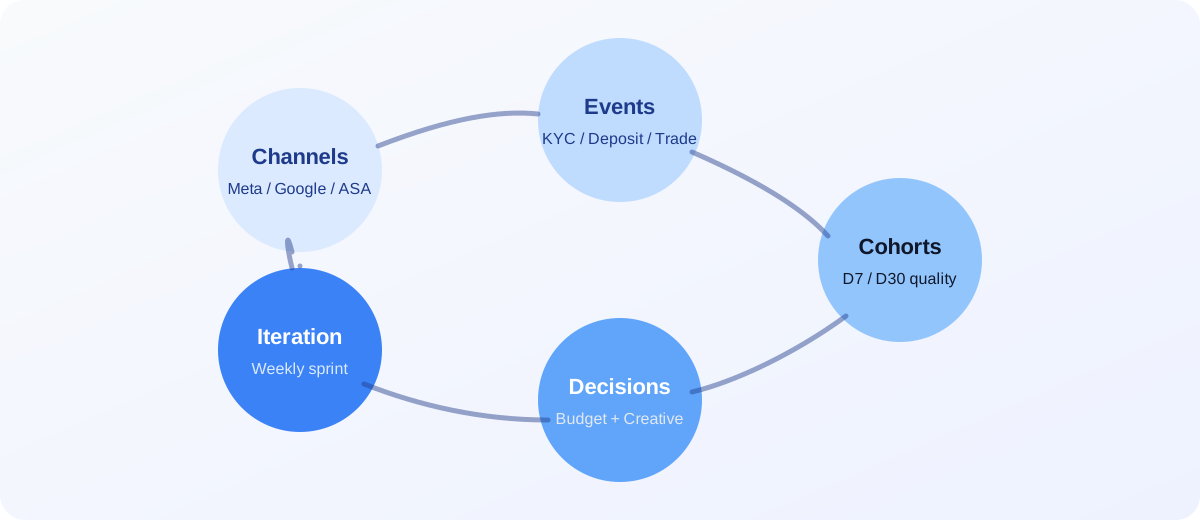
Use this baseline measurement setup:
- GA4 + GTM events for key milestones (signup, KYC start, KYC complete, deposit, first trade)
- Server-side event forwarding where possible
- Weekly cohort table by source/medium and campaign intent
- One source of truth KPI sheet reviewed every week
If your tracking stack is weak, fix this first with a proper GA4 conversion framework and a practical attribution model.
Step 7: Run a weekly optimization cadence
High-performing funnels improve through rhythm, not random experiments. A simple weekly cycle works:
- Review funnel drop-offs by intent segment
- Ship 2 to 3 creative tests per segment
- Run 1 landing-page test on the worst bottleneck
- Adjust bids/budgets toward funded-user efficiency, not front-end volume
- Document what worked and roll winners into the control set
Compounding small improvements at each stage beats chasing a single "viral" ad.
A practical 30-60-90 day rollout
Days 1-30: Instrumentation, message-offer fit, intent-based pages, baseline campaigns.
Days 31-60: Activation sequence optimization, creative iteration, negative keyword and audience refinement.
Days 61-90: Scale winning segments, expand channel mix, strengthen retention and referral loops.
Final thought
A crypto marketing funnel that converts is not about hacks. It is about alignment: acquisition promise, landing-page trust, onboarding momentum, and measurement discipline. When those four are connected, paid traffic stops feeling expensive and starts compounding.
If you want, I can map this framework to your exact product and market in a practical 90-day growth strategy.
Get weekly growth ideas in your inbox
Practical SEO, PPC, analytics, and CRO notes with zero spam.
Frequently Asked Questions
What is the most important metric in a crypto marketing funnel?▾
Should I start with Google, Meta, or Apple Search Ads?▾
How long does it take to stabilize a new crypto funnel?▾
Can I run a crypto funnel without perfect attribution?▾

Digital marketing consultant — SEO, PPC, analytics & CRO.