Walled Garden
A closed advertising ecosystem — Google, Meta, Amazon, TikTok — that owns the audience, the inventory, and the measurement stack, and restricts what data advertisers can export. Walled gardens offer scale and signal quality but make cross-platform attribution difficult because each platform self-reports conversions it wants to claim. Sophisticated advertisers counterbalance walled-garden reporting with incrementality tests and media-mix modelling.
How Walled Garden works in practice
Each walled garden optimises against the conversions it can see and claim, which is why ROAS figures from Google, Meta, TikTok, and Amazon rarely sum to the advertiser’s ground-truth revenue. Meta’s conversion API can claim a purchase it influenced; Google can claim the same purchase through data-driven attribution; the advertiser’s true incremental figure is much smaller than either platform reports. The operating consequence is that spend decisions cannot be made from platform dashboards alone — they need a counter-weight in the form of geo holdout tests, matched-market incrementality studies, or a media-mix model that sits outside any single platform. Walled gardens are still where the audiences are, but treating their attribution as truth leads to over-investment in whichever platform is loudest about claiming credit.

Your digital consultant
Hi, I'm Wameq.
If your ad spend is climbing but returns are not, let's find where the money is leaking.
Let's talk →This term sits in the Paid Media category, which means it is most useful when evaluating paid campaigns, auction dynamics, targeting control, and media efficiency. The goal is not to memorize the label. The goal is to know when it should change a decision, a page, a campaign, or a measurement setup.
Related terms
Automated buying and selling of digital advertising inventory through real-time bidding platforms. Programmatic enables precise audience-level targeting across thousands of publisher sites simultaneously, replacing manual direct insertion orders. Demand-Side Platforms (DSPs) such as DV360, The Trade Desk, and Amazon DSP are the primary execution tools.
The rule that determines how credit for a conversion is assigned to different marketing touchpoints in the user journey. Choosing the right model affects how you allocate budget across channels and evaluate channel ROI.
A privacy-safe environment where two or more parties — typically an advertiser and a platform like Google Ads Data Hub, Amazon Marketing Cloud, or LiveRamp — can join and analyse user-level data without either party seeing the other’s raw records. Clean rooms power measurement, audience overlap analysis, and incrementality testing in a cookieless world. They are powerful but slow, expensive, and require significant analytics engineering to extract real value.
A controlled experiment measuring the true causal impact of a marketing channel by comparing a test group exposed to the campaign against a holdout group that is not. Incrementality testing answers "how much revenue would we have generated without this channel?" — a question attribution models estimate but cannot definitively answer. Holdout tests are offered natively by Meta (Conversion Lift) and Google (Geo Experiments).
Put Walled Garden to work
Understanding Walled Garden is one thing — operationalising it across tracking, acquisition, and conversion is another. Explore the full range of digital marketing services, including SEO & content consulting, paid media management, and analytics & CRO. Or work directly with a digital marketing consultant in Dubai on building growth systems that actually compound.
Learn more: related articles
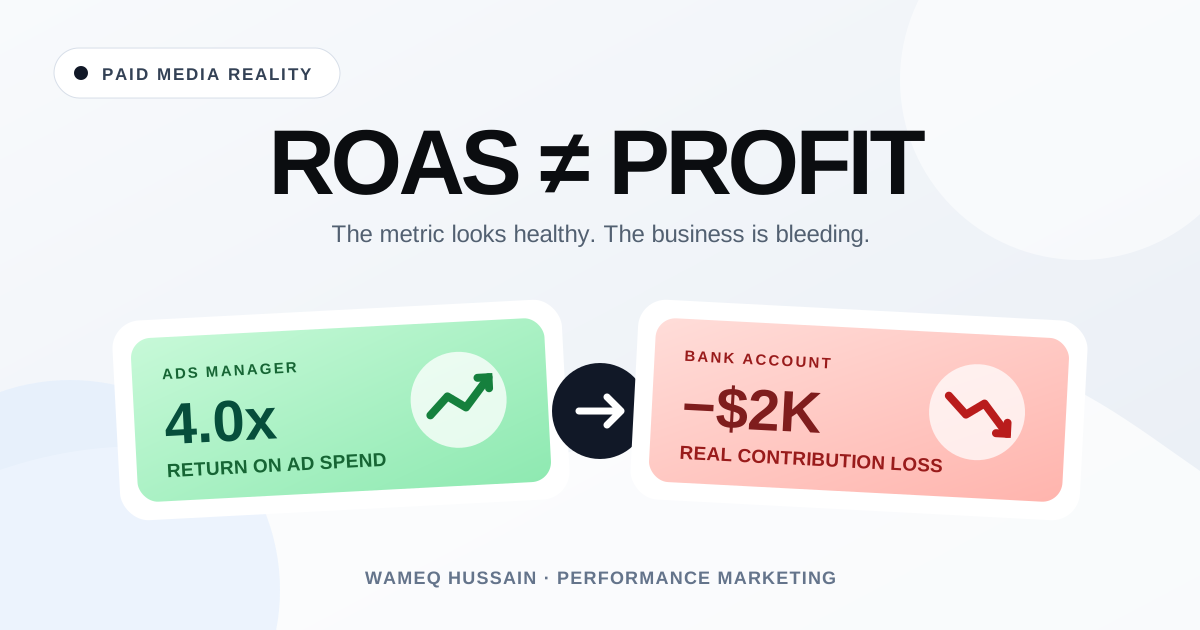
Why Your Ads Look Profitable but Your Business Is Still Losing Money
Your ads report healthy ROAS while margin keeps shrinking. See where the numbers split—and how to measure whether paid media actually makes money.

Crypto Advertising Compliance in 2026: Licences, Certifications and Ad Platform Rules by Region
Crypto is now the most heavily gated advertising category on the internet, and the gate has two locks: the licence your financial regulator issues, and the certification each ad platform grants on proof of it — country by country. This is the full 2026 reference: every region Google will certify and the exact licence it demands, what stays banned regardless of licence, the marketing rules VARA, MiCA, the FCA and MAS impose on your creative, and what to do in the markets where paid media is simply closed.
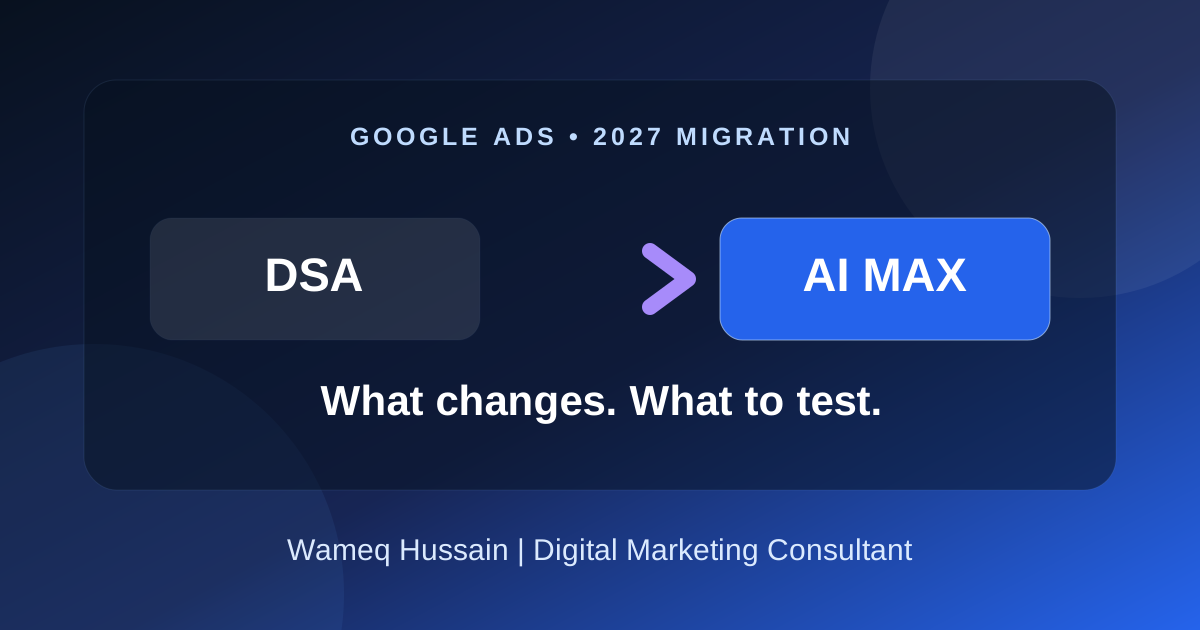
Google Dynamic Search Ads Are Going Away: How to Prepare for AI Max
Google is moving Dynamic Search Ads into AI Max from February 2027. Here is what changes and how to test the migration without giving up control.