
Travel Rule
A FATF-originated regulation requiring virtual asset service providers to share originator and beneficiary information for transfers above a threshold. Compliance with the Travel Rule is now a baseline trust and market-access requirement for any regulated exchange.
How Travel Rule works in practice
The Travel Rule extends traditional financial-institution information-sharing requirements to virtual asset service providers, obliging them to transmit originator and beneficiary data for transfers above a jurisdictional threshold. For exchanges it is no longer optional infrastructure: Travel Rule compliance gates banking relationships, market access, and institutional partnerships, and its absence is a red flag to sophisticated users. From a marketing standpoint, demonstrable compliance is a trust asset for the institutional and high-net-worth segments, while the associated data collection must be designed into onboarding carefully so it adds confidence rather than friction at the exact point deposit conversion is most fragile.

Your digital consultant
Hi, I'm Wameq.
If your protocol has users but not engagement, growth strategy is what's missing.
Let's talk →This term sits in the Crypto & Fintech category, which means it is most useful when evaluating on-chain activation, token behavior, protocol growth, and community participation. The goal is not to memorize the label. The goal is to know when it should change a decision, a page, a campaign, or a measurement setup.
Related terms
The controls — KYC, transaction monitoring, sanctions screening, and reporting — that exchanges operate to detect and prevent illicit fund flows. Beyond regulatory necessity, demonstrable AML maturity has become a marketable trust signal for institutional and retail acquisition alike.
A regulatory requirement mandating that financial service providers verify the identity of customers before providing services. In fintech and crypto, KYC involves collecting and verifying government-issued ID, address proof, and sometimes source-of-funds documentation. KYC friction is a primary conversion drop-off in fintech onboarding funnels — reducing completion time while maintaining compliance is a critical CRO challenge.
Holding crypto assets in a wallet whose private keys the user alone controls, with no exchange or third party able to move the funds. The self-custody versus custodial trade-off — control versus convenience — is a central theme in exchange positioning and onboarding education.
Put Travel Rule to work
Understanding Travel Rule is one thing — operationalising it across tracking, acquisition, and conversion is another. Explore the full range of digital marketing services, including SEO & content consulting, paid media management, and analytics & CRO. Or work directly with a digital marketing consultant in Dubai on building growth systems that actually compound.
Learn more: related articles
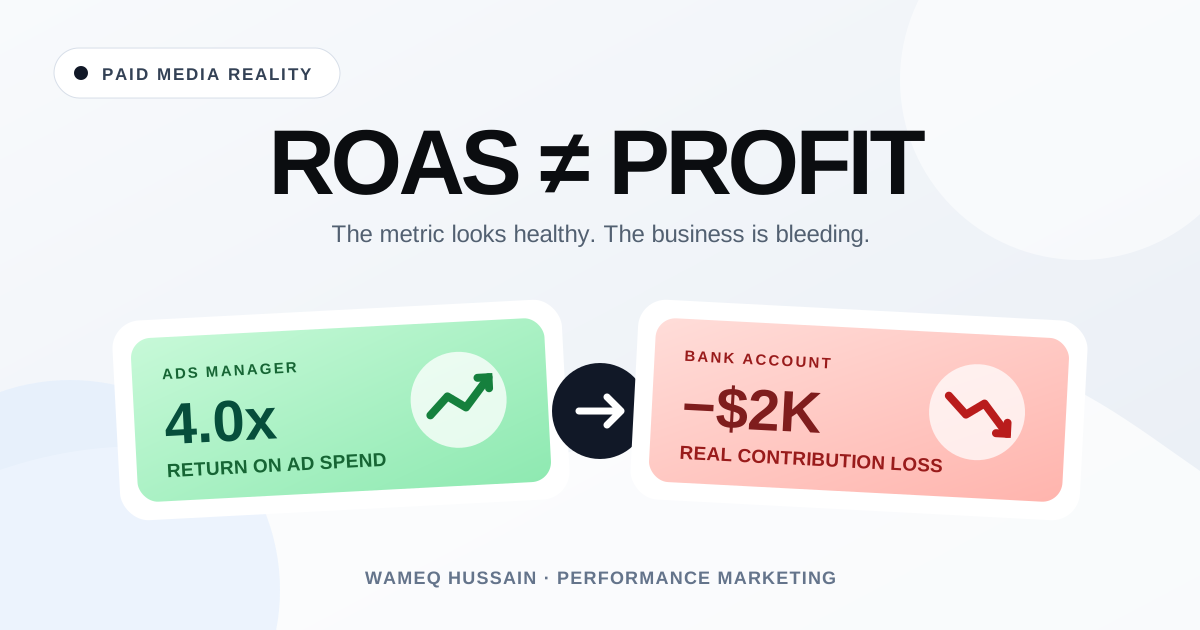
Why Your Ads Look Profitable but Your Business Is Still Losing Money
Your ads report healthy ROAS while margin keeps shrinking. See where the numbers split—and how to measure whether paid media actually makes money.
Crypto Advertising Compliance in 2026: Licences, Certifications and Ad Platform Rules by Region
Crypto is now the most heavily gated advertising category on the internet, and the gate has two locks: the licence your financial regulator issues, and the certification each ad platform grants on proof of it — country by country. This is the full 2026 reference: every region Google will certify and the exact licence it demands, what stays banned regardless of licence, the marketing rules VARA, MiCA, the FCA and MAS impose on your creative, and what to do in the markets where paid media is simply closed.
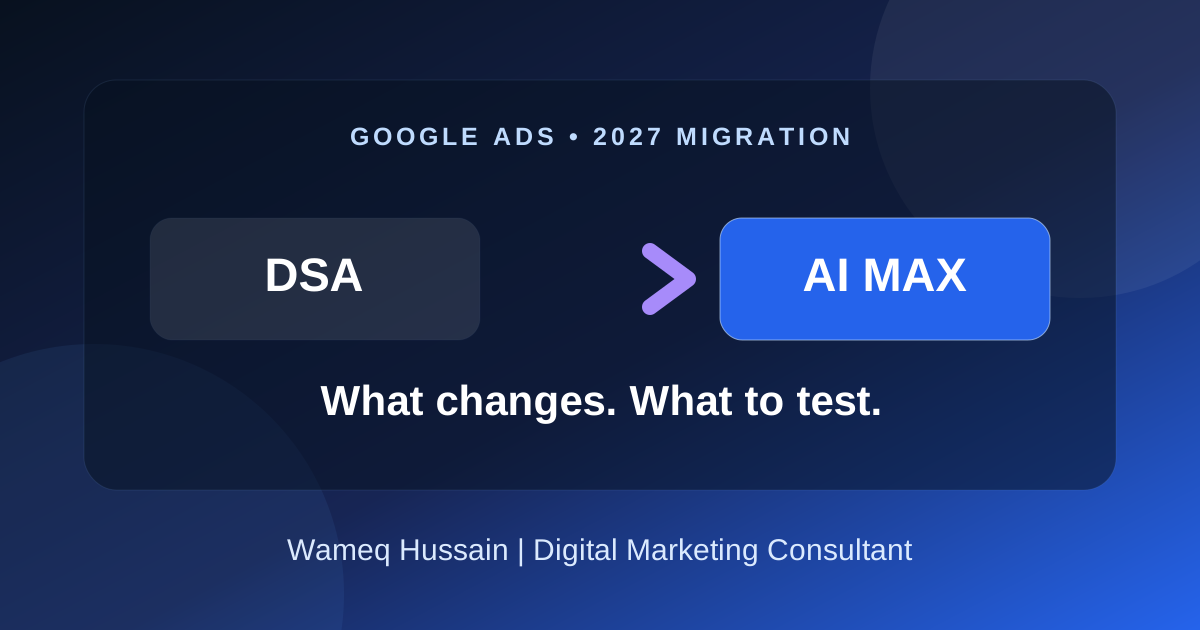
Google Dynamic Search Ads Are Going Away: How to Prepare for AI Max
Google is moving Dynamic Search Ads into AI Max from February 2027. Here is what changes and how to test the migration without giving up control.