
Staking Rate
The proportion of token holders or circulating supply that is staked rather than idle or traded, often used as a signal of ecosystem participation and token alignment.
How Staking Rate works in practice
Staking rate reflects how much of a token’s supply is being committed to network participation, yield generation, or ecosystem alignment rather than remaining liquid. A higher staking rate can indicate confidence and long-term participation, but it can also be heavily influenced by incentives. The real interpretation depends on why users are staking and what happens when those incentives change. For token teams, staking rate is both an economic and behavioural metric.

Your digital consultant
Hi, I'm Wameq.
If your protocol has users but not engagement, growth strategy is what's missing.
Let's talk →This term sits in the Crypto & Fintech category, which means it is most useful when evaluating on-chain activation, token behavior, protocol growth, and community participation. The goal is not to memorize the label. The goal is to know when it should change a decision, a page, a campaign, or a measurement setup.
Related terms
The economic design of a cryptocurrency or blockchain project's token — including supply schedule, distribution, utility, and incentive structures — that directly influences community growth, user retention, and token price dynamics.
The percentage of wallet addresses that return to interact with a protocol again after an initial on-chain action, used as a rough analogue to user retention in Web3.
The total value of crypto assets deposited in a DeFi protocol's smart contracts at a given moment, measured in USD. TVL is the primary size metric for DeFi protocols — growing TVL indicates strong user trust and protocol utility. It is tracked by aggregators such as DefiLlama and used to benchmark protocols within the same category.
Put Staking Rate to work
Understanding Staking Rate is one thing — operationalising it across tracking, acquisition, and conversion is another. Explore the full range of digital marketing services, including SEO & content consulting, paid media management, and analytics & CRO. Or work directly with a digital marketing consultant in Dubai on building growth systems that actually compound.
Learn more: related articles
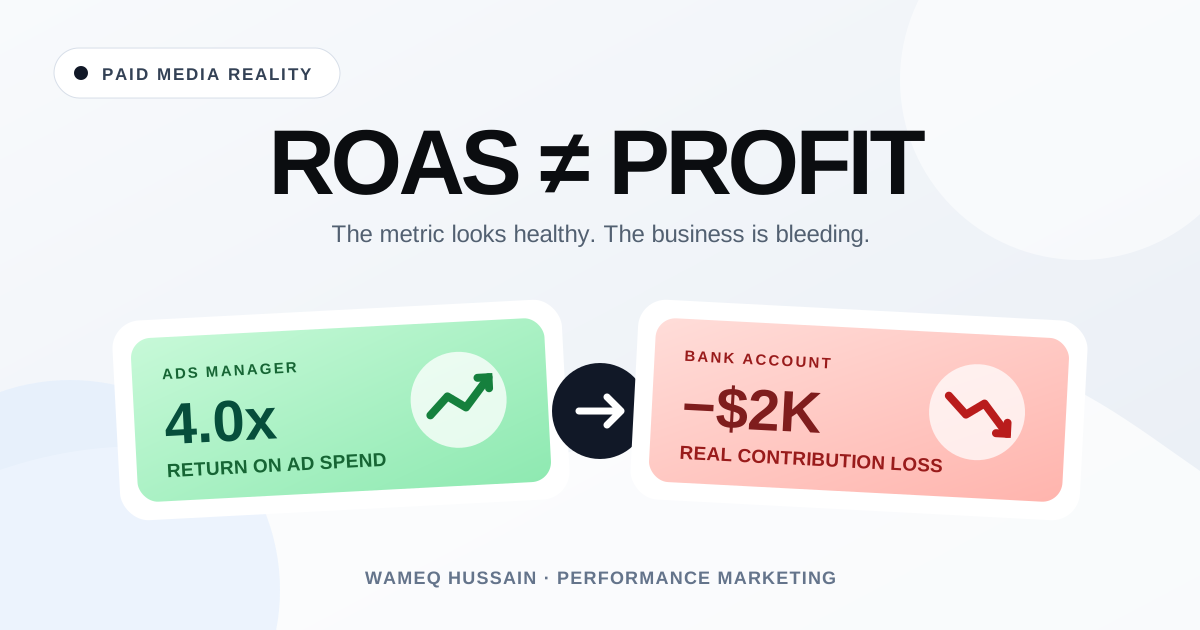
Why Your Ads Look Profitable but Your Business Is Still Losing Money
Your ads report healthy ROAS while margin keeps shrinking. See where the numbers split—and how to measure whether paid media actually makes money.

Crypto Advertising Compliance in 2026: Licences, Certifications and Ad Platform Rules by Region
Crypto is now the most heavily gated advertising category on the internet, and the gate has two locks: the licence your financial regulator issues, and the certification each ad platform grants on proof of it — country by country. This is the full 2026 reference: every region Google will certify and the exact licence it demands, what stays banned regardless of licence, the marketing rules VARA, MiCA, the FCA and MAS impose on your creative, and what to do in the markets where paid media is simply closed.
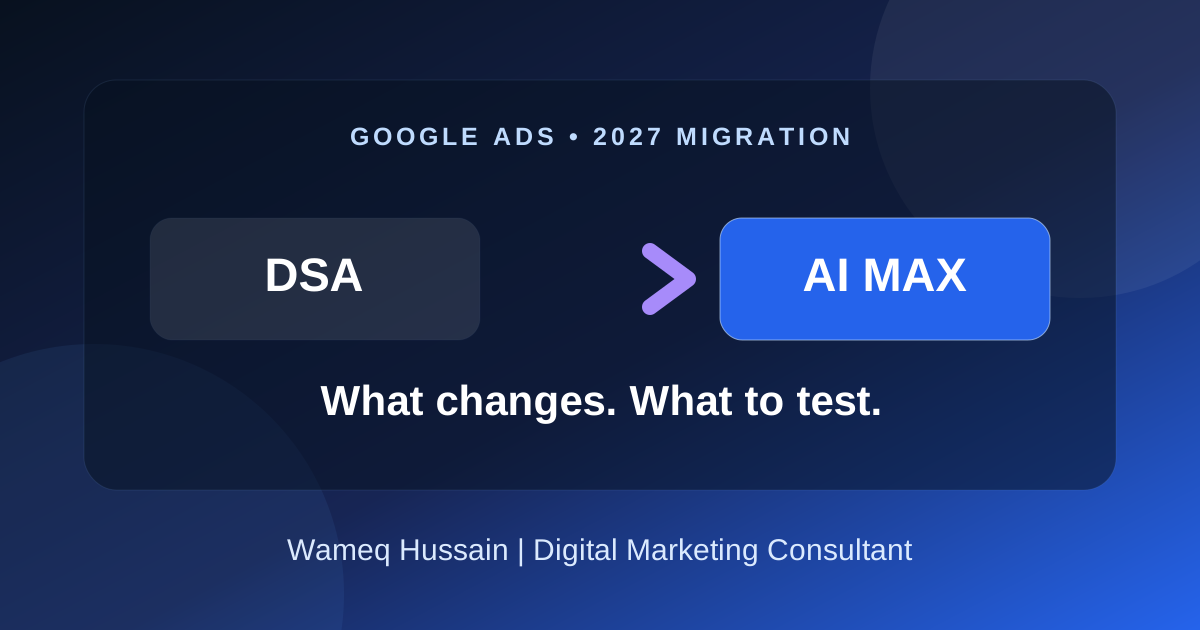
Google Dynamic Search Ads Are Going Away: How to Prepare for AI Max
Google is moving Dynamic Search Ads into AI Max from February 2027. Here is what changes and how to test the migration without giving up control.