Tokenomics
The economic design of a cryptocurrency or blockchain project's token — including supply schedule, distribution, utility, and incentive structures — that directly influences community growth, user retention, and token price dynamics.
How Tokenomics works in practice
Poor tokenomics design — excessive team and investor allocations with short unlock cliffs, uncapped inflationary supply without utility demand, or token rewards that primarily incentivise short-term speculation — creates persistent sell pressure that undermines price stability and community trust. Sustainable tokenomics align supply-side incentives (emissions to liquidity providers and participants) with demand-side utility (tokens required to access governance, premium features, or protocol participation), creating a self-reinforcing economic loop rather than a one-way inflation mechanism. Token vesting schedules — with longer lockups for team and investors than for community participants — signal long-term commitment and reduce early sell pressure that can crater launches. Tokenomics must be designed before launch as post-launch changes require governance approval, community consensus, and often create the perception of a protocol in distress even when changes are clearly improvements.

Your digital consultant
Hi, I'm Wameq.
If your protocol has users but not engagement, growth strategy is what's missing.
Let's talk →This term sits in the Crypto & Fintech category, which means it is most useful when evaluating on-chain activation, token behavior, protocol growth, and community participation. The goal is not to memorize the label. The goal is to know when it should change a decision, a page, a campaign, or a measurement setup.
Related terms
Financial services — lending, trading, yield farming — built on blockchain smart contracts without traditional intermediaries. DeFi protocols use token incentives and community governance as viral growth and retention mechanisms.
Marketing strategies native to blockchain-based products, including community building on Discord and Telegram, token airdrop campaigns, influencer partnerships, and on-chain growth analytics. Community is the primary distribution channel.
Put Tokenomics to work
Understanding Tokenomics is one thing — operationalising it across tracking, acquisition, and conversion is another. Explore the full range of digital marketing services, including SEO & content consulting, paid media management, and analytics & CRO. Or work directly with a digital marketing consultant in Dubai on building growth systems that actually compound.
Learn more: related articles
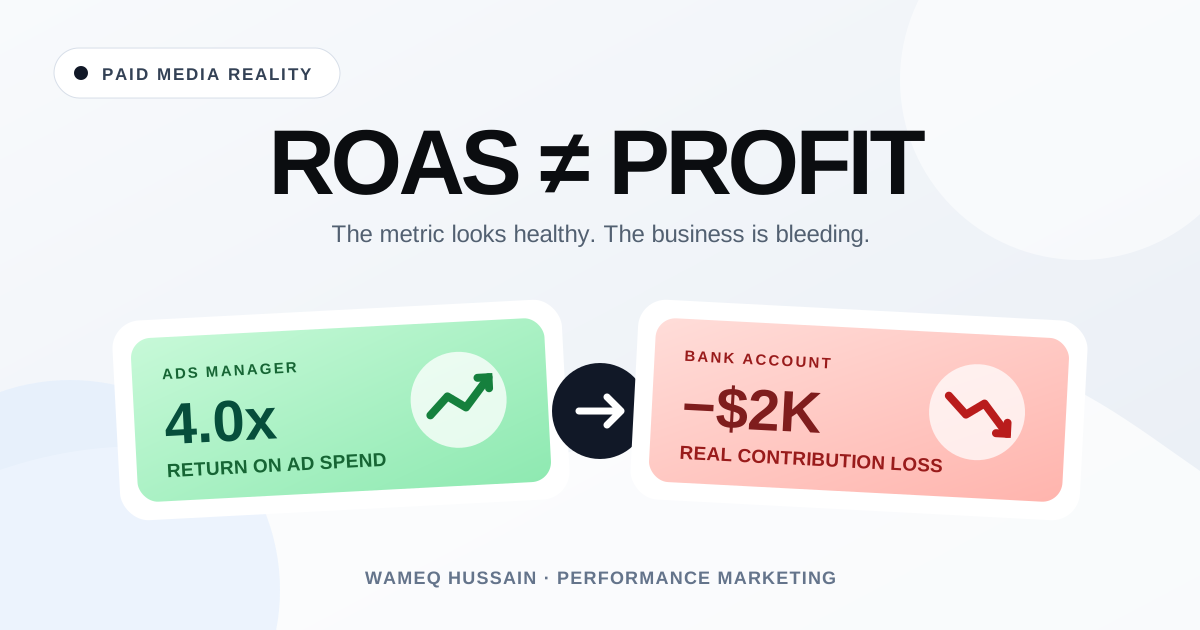
Why Your Ads Look Profitable but Your Business Is Still Losing Money
Your ads report healthy ROAS while margin keeps shrinking. See where the numbers split—and how to measure whether paid media actually makes money.
Crypto Advertising Compliance in 2026: Licences, Certifications and Ad Platform Rules by Region
Crypto is now the most heavily gated advertising category on the internet, and the gate has two locks: the licence your financial regulator issues, and the certification each ad platform grants on proof of it — country by country. This is the full 2026 reference: every region Google will certify and the exact licence it demands, what stays banned regardless of licence, the marketing rules VARA, MiCA, the FCA and MAS impose on your creative, and what to do in the markets where paid media is simply closed.
Google Dynamic Search Ads Are Going Away: How to Prepare for AI Max
Google is moving Dynamic Search Ads into AI Max from February 2027. Here is what changes and how to test the migration without giving up control.