
Responsive Search Ads
RSA (Responsive Search Ads)
The standard Google Ads text ad format accepting up to 15 headlines and 4 description lines. Google's machine learning tests combinations and learns which pairings perform best for different queries, audiences, and devices. Providing at least 8–10 distinct, non-repetitive headlines maximises the system's ability to optimise.
How Responsive Search Ads works in practice
RSAs replaced the legacy Expanded Text Ad format as the default in June 2022. The system uses machine learning to identify which of the 15 headline and 4 description combinations generate the best CTR and conversion rate for each query-audience-device combination, effectively running hundreds of A/B tests simultaneously. "Ad strength" (Poor, Average, Good, Excellent) measures creative diversity — but it is a proxy for variety, not actual performance; an Excellent-rated RSA can underperform a Poor-rated one with more specific messaging. Pinning specific headlines to specific positions (Pin Headline 1) reduces Google's ability to optimise but is useful when brand messaging or compliance requirements demand fixed placement.

Your digital consultant
Hi, I'm Wameq.
If your ad spend is climbing but returns are not, let's find where the money is leaking.
Let's talk →This term sits in the Paid Media category, which means it is most useful when evaluating paid campaigns, auction dynamics, targeting control, and media efficiency. The goal is not to memorize the label. The goal is to know when it should change a decision, a page, a campaign, or a measurement setup.
Related terms
Google's online advertising platform allowing businesses to display ads on Google Search, YouTube, Gmail, and the Google Display Network. Advertisers bid in real-time auctions where Ad Rank determines placement.
Google's 1–10 rating of the relevance and quality of your keywords, ads, and landing pages. Higher Quality Scores lower your CPC and improve Ad Rank, making it a key lever for Google Ads efficiency.
The percentage of people who see your ad and click it. CTR = (Clicks ÷ Impressions) × 100. A strong CTR signals ad relevance; a weak CTR suggests misalignment between ad copy and audience intent.
Google's composite score that determines an ad's position in search results. Ad Rank = Bid × Quality Score × contextual signals (device, location, time, and expected impact of extensions). Higher Ad Rank wins better positions at lower effective cost.
Put Responsive Search Ads to work
Understanding Responsive Search Ads is one thing — operationalising it across tracking, acquisition, and conversion is another. Explore the full range of digital marketing services, including SEO & content consulting, paid media management, and analytics & CRO. Or work directly with a digital marketing consultant in Dubai on building growth systems that actually compound.
Learn more: related articles
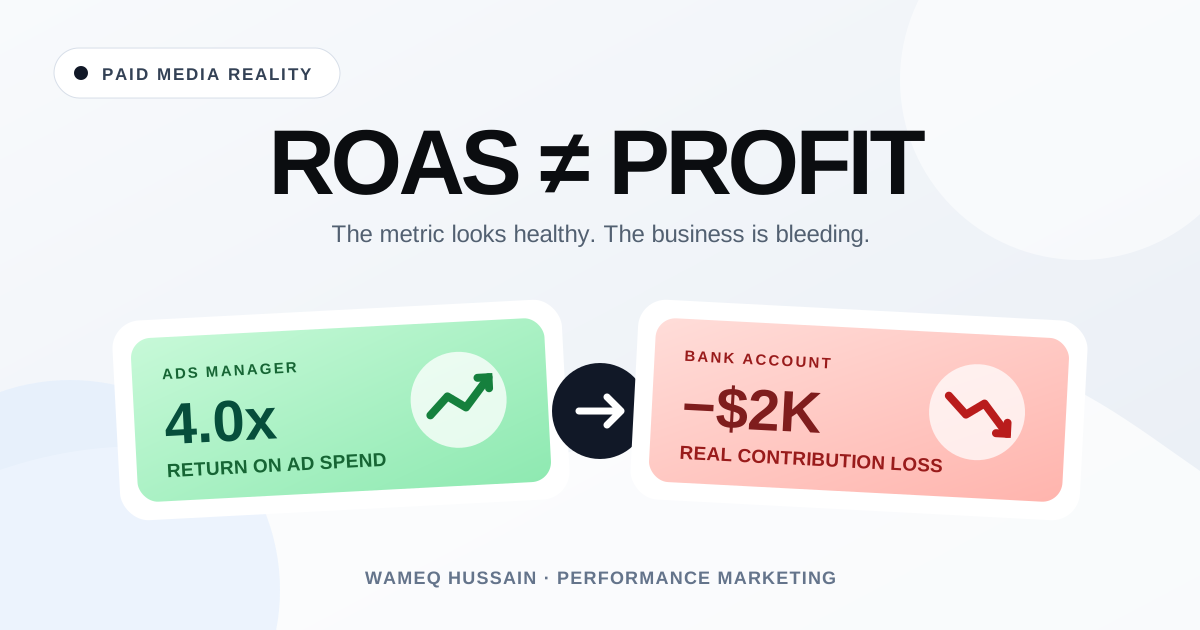
Why Your Ads Look Profitable but Your Business Is Still Losing Money
Your ads report healthy ROAS while margin keeps shrinking. See where the numbers split—and how to measure whether paid media actually makes money.

Crypto Advertising Compliance in 2026: Licences, Certifications and Ad Platform Rules by Region
Crypto is now the most heavily gated advertising category on the internet, and the gate has two locks: the licence your financial regulator issues, and the certification each ad platform grants on proof of it — country by country. This is the full 2026 reference: every region Google will certify and the exact licence it demands, what stays banned regardless of licence, the marketing rules VARA, MiCA, the FCA and MAS impose on your creative, and what to do in the markets where paid media is simply closed.
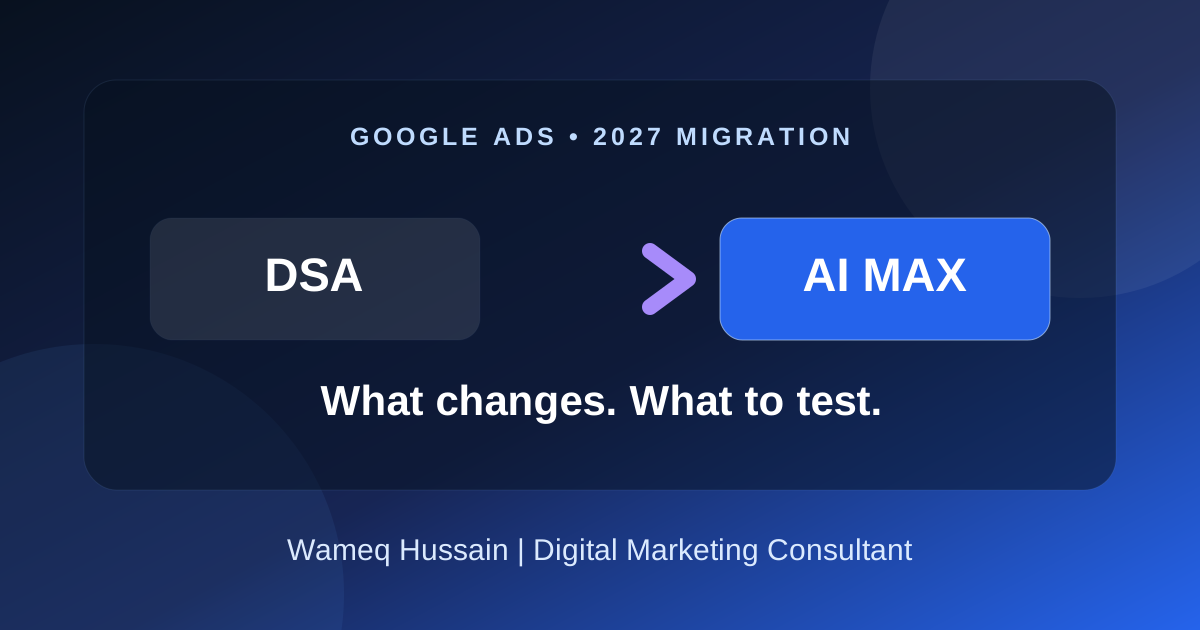
Google Dynamic Search Ads Are Going Away: How to Prepare for AI Max
Google is moving Dynamic Search Ads into AI Max from February 2027. Here is what changes and how to test the migration without giving up control.