Brand Bidding
Bidding on your own brand name in paid search to defend SERP real estate from competitors, partners, and affiliates running conquest campaigns. Brand bidding is usually high-ROAS on paper but much of that revenue would have arrived through organic clicks — making incrementality the right lens rather than surface ROAS. The correct budget for brand defence is whatever is needed to protect the top of the SERP when a competitor is actively bidding, and no more.
How Brand Bidding works in practice
The economic case for brand bidding is incrementality, not surface ROAS. A brand-term search almost always shows your organic result in position one already, so paid clicks often substitute for clicks you would have won for free. Holdout tests — pausing brand campaigns in some geos while maintaining them in others — routinely show that 60–90% of the "conversions" brand campaigns report would have happened anyway. The correct framing is defensive: if a competitor is actively bidding on your brand, you need to be present to protect the top of the SERP, control the messaging, and point users at the right landing page. If no one is conquesting, brand spend should be dialled back to the minimum needed to keep pace with affiliate and partner bids. Either way, track incremental conversions — not reported ROAS — when sizing the budget.

Your digital consultant
Hi, I'm Wameq.
If your ad spend is climbing but returns are not, let's find where the money is leaking.
Let's talk →This term sits in the Paid Media category, which means it is most useful when evaluating paid campaigns, auction dynamics, targeting control, and media efficiency. The goal is not to memorize the label. The goal is to know when it should change a decision, a page, a campaign, or a measurement setup.
Related terms
A paid search tactic where advertisers bid on competitor brand terms to capture comparison-stage demand. It can work, but usually requires careful message match and economics.
The percentage of eligible impressions your ads received out of the total available. Lost IS (budget) and Lost IS (rank) break down the two primary reasons for missed impressions and guide budget or bid decisions.
A controlled experiment measuring the true causal impact of a marketing channel by comparing a test group exposed to the campaign against a holdout group that is not. Incrementality testing answers "how much revenue would we have generated without this channel?" — a question attribution models estimate but cannot definitively answer. Holdout tests are offered natively by Meta (Conversion Lift) and Google (Geo Experiments).
Google's 1–10 rating of the relevance and quality of your keywords, ads, and landing pages. Higher Quality Scores lower your CPC and improve Ad Rank, making it a key lever for Google Ads efficiency.
Put Brand Bidding to work
Understanding Brand Bidding is one thing — operationalising it across tracking, acquisition, and conversion is another. Explore the full range of digital marketing services, including SEO & content consulting, paid media management, and analytics & CRO. Or work directly with a digital marketing consultant in Dubai on building growth systems that actually compound.
Learn more: related articles
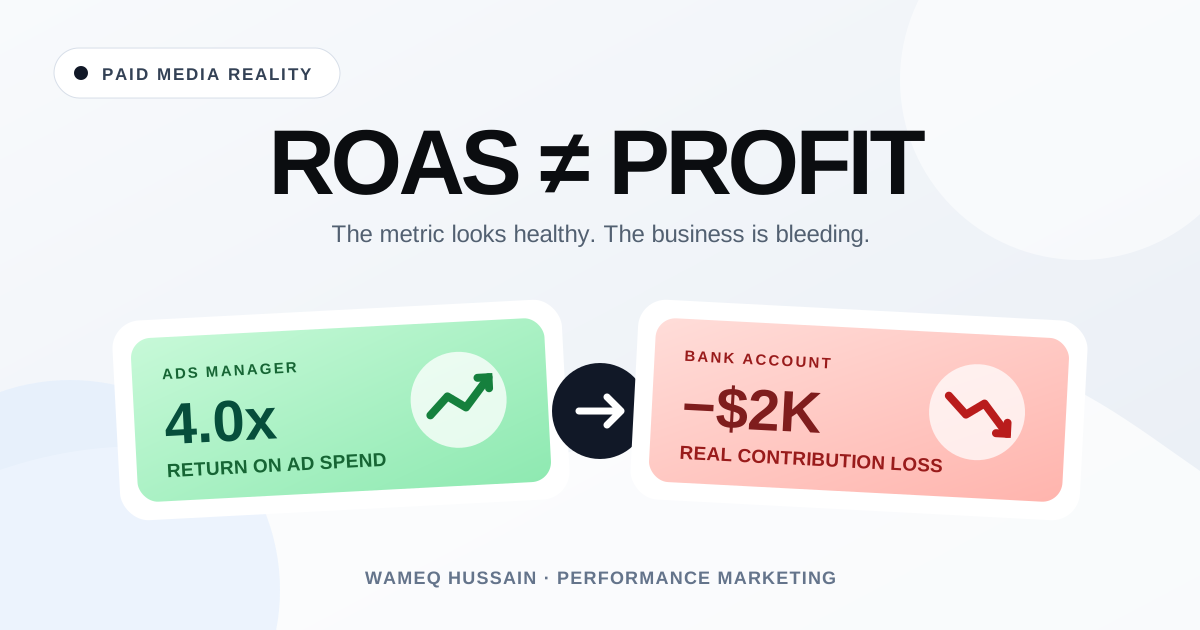
Why Your Ads Look Profitable but Your Business Is Still Losing Money
Your ads report healthy ROAS while margin keeps shrinking. See where the numbers split—and how to measure whether paid media actually makes money.

Crypto Advertising Compliance in 2026: Licences, Certifications and Ad Platform Rules by Region
Crypto is now the most heavily gated advertising category on the internet, and the gate has two locks: the licence your financial regulator issues, and the certification each ad platform grants on proof of it — country by country. This is the full 2026 reference: every region Google will certify and the exact licence it demands, what stays banned regardless of licence, the marketing rules VARA, MiCA, the FCA and MAS impose on your creative, and what to do in the markets where paid media is simply closed.
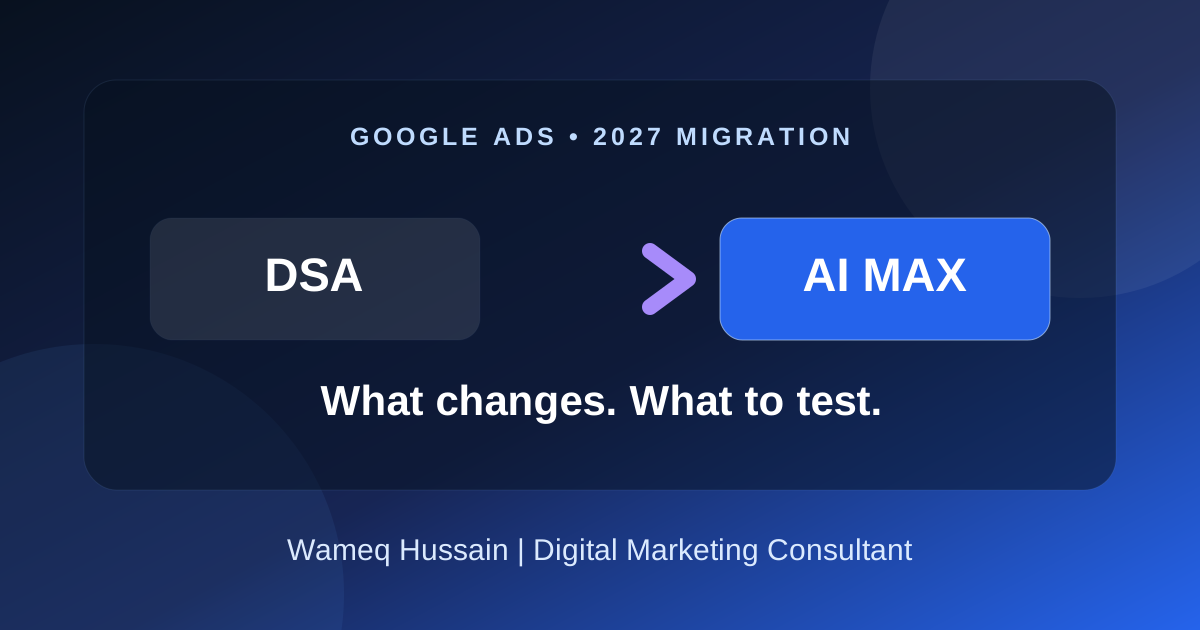
Google Dynamic Search Ads Are Going Away: How to Prepare for AI Max
Google is moving Dynamic Search Ads into AI Max from February 2027. Here is what changes and how to test the migration without giving up control.