
The Challenge
Kid Mind Training App had a clear product idea: help children build focus, memory, problem-solving, and stronger learning habits through short guided activities. The growth problem was not a lack of installs. It was the gap between an install and a child completing enough sessions for a parent to see the value of the app.
Paid campaigns were being judged mainly on cost per install. That made the dashboards look active, but it did not show which campaigns produced completed onboarding, a first training session, a trial start, or a subscription. Creative was also too broad. It described a "brain training app for kids" without giving parents a specific reason to trust it, understand the routine, or know what would happen after downloading.
The Approach
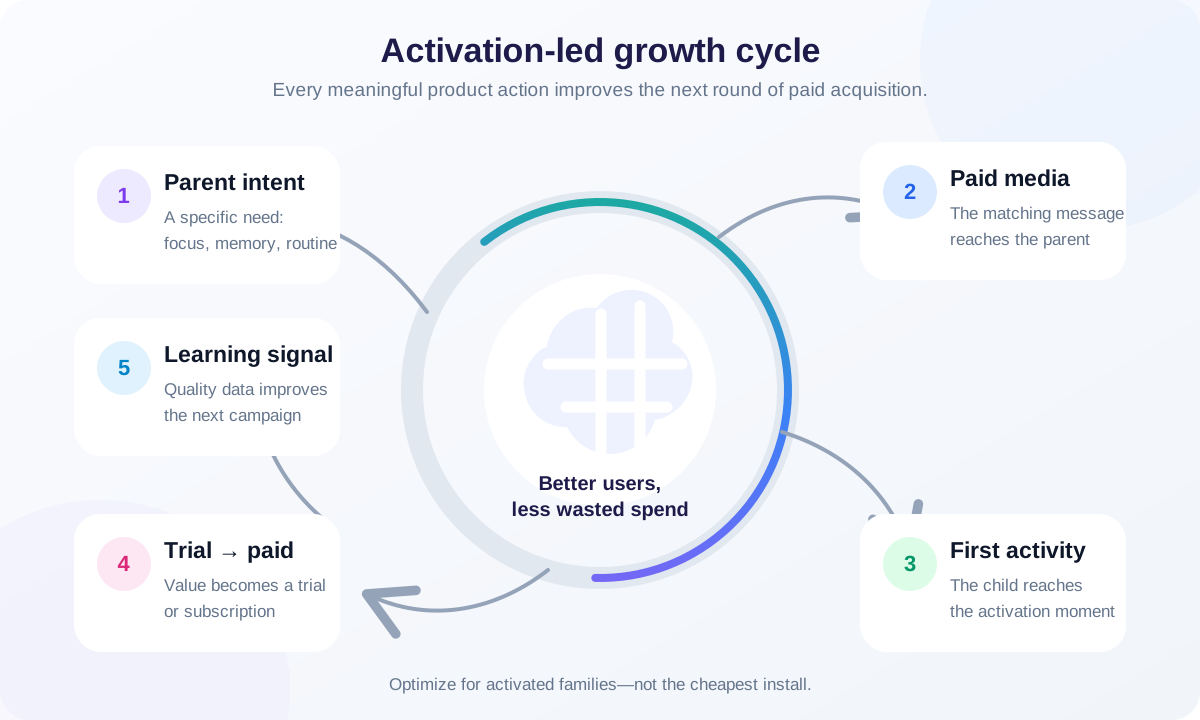
We rebuilt the performance marketing setup around activation rather than install volume. The funnel was mapped from ad impression to store visit, install, parent onboarding, first completed activity, repeat session, trial start, and subscription. These events were connected to campaign reporting so Google and Meta could learn from meaningful product behaviour instead of the cheapest available install.
Campaigns were reorganised by parent intent. Separate messages addressed focus and attention, memory practice, screen time with a purpose, and simple daily learning routines. The creative testing system compared one message angle at a time across short videos, product demonstrations, parent-focused statics, and activity previews. Claims stayed grounded in the product experience; the ads did not promise medical, developmental, or academic outcomes the app could not prove.
We also tightened the journey after the click. App-store and landing-page messaging was aligned with the ad that brought the parent in, onboarding explained the first session before asking for commitment, and the product surfaced a useful activity quickly. Campaign reviews then looked beyond CPI to activation rate, cost per trial, subscription conversion, and early repeat usage.
The Results
The acquisition programme moved from buying anonymous installs to learning which messages and audiences produced activated families. Budget could be pulled away from low-cost install sources that generated little product use and redirected toward campaigns that produced completed sessions, trials, and subscriptions.
The new measurement structure gave the team a reliable view of the complete journey from ad to paid user. Parent-intent creative also created a repeatable testing system: each campaign answered a specific concern, each variation had one clear hypothesis, and every decision could be tied back to product behaviour rather than click-through rate alone.
Exact commercial figures remain confidential. The durable outcome was a performance marketing system Kid Mind could continue scaling without confusing more installs with more growth.
Let's build your growth plan
I'll audit your current setup — ads, tracking, and funnel — and come back with a clear, prioritised roadmap. No fluff, no retainer commitment.
Book a free audit
Digital marketing consultant — SEO, PPC, analytics & CRO.